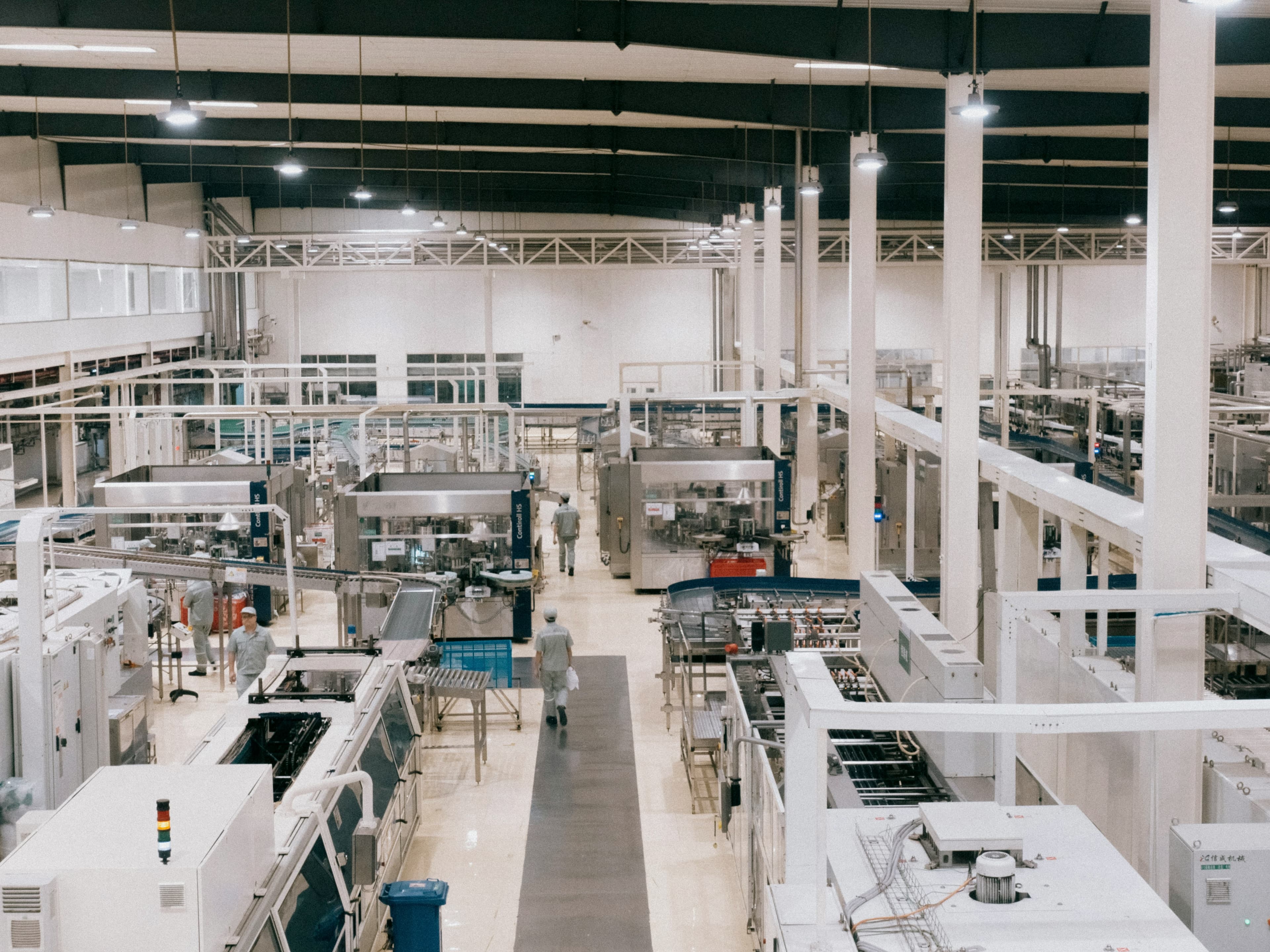
I remember being a little shocked reading the end of year newsletter at Nestlé: "X person is celebrating 40 years with us", "Y and Z are passing 30 years"... etc. That's incredibly rare in the software world, especially in my generation (I'm on the cusp of Gen Z apparently…) where people tend to stay only a few years at each employer. Industry is different though.
It goes to show that in a lot of factories, there's folk with decades of experience and wisdom under their belts. They've seen the factory through its various periods, whether it made different products, had entirely different brands or owners, and when some of the people working there today weren't even born (in that case, me!). They're in their 60s, know every nook and cranny of your site, every possible person you could want to contact for any particular enquiry, and now they're letting you know they plan to retire.
It's sad to see them go, and from the factory's perspective, it's going to lose one of its most valuable talents. The impact on the bottom line is clear. So… what do you do?
Finding a Replacement is Incredibly Difficult
"X would have figured this out in no time."
New problems appear as the previous person leaves. In reality, there's no 'new problems': your old person was silently maintaining it all like clockwork and no one knew about it because they were little quirks, like some car owners knowing not to clock above 3k rpm on their Honda.
Every factory has its own set of processes, systems, naming conventions, etc. For example we were once in the daily operational meeting at a factory, and there was all this talk around the Verbruggen causing all sorts of issues. The new engineering manager (huge responsibility) was there listening to all of it. At the end of the meeting, he said "ok I understand what's going on and what needs to be actioned. Just... what the hell is a Verbruggen!?". Hint: the Verbruggen was a palletiser.
Now, imagine this but for every equipment, process, product, cell, line etc. Engineers and electricians in Europe are called fitters and sparkies in New Zealand! There's no textbook: this is learned over time.
The skills and experience your senior engineer has are irreplaceable. They've built up that knowledge over years of working with YOUR tools, equipment, suppliers and people. No one understands your operations and workflow better than them.
Bringing in someone external with a lot of experience under their belt can bring in a fresh perspective and potentially better processes, but no matter who you decide to call in, they need time to adapt to your systems and equipment. I would personally think it's good enough and that you can get them up to speed in no time. But in reality, the world of manufacturing clings on to the experts (sometimes just on a contracting/consultancy basis) to provide some support to the younger expert who's just joined the organisation. Your new expert.
In a previous blog post I gave the example of pallet slipsheets causing serious trouble on a line. You can have the smartest engineer on the line, and it would have still taken days or weeks to resolve the problem. I can tell you that if the original operator had stood there to share the history of that slipsheet situation, it would have been resolved on that day.
In instances like this, lived experience and access to CONTEXT is worth millions of dollars. No wonder factories hold on to these experts! They're worth the money. They bring something intangible that no manual covers.
A friend's father was held beyond his retirement to support the technical passing of his knowledge to the new team after the OEM he worked for was bought by a larger European firm. But eventually, it's unavoidable that they have to leave (which he has), and in doing so they take a wealth of tacit knowledge that disappears from the site forever.
How Do We Retain Their Knowledge?
The next challenge starts here. As soon as we know our senior engineer plans to leave, we roll out the red carpet… to the computer, where they can turn all that hard-earned tacit experience into words! We ask them to write down all that they know. We make them update ye' ol SOPs wherever possible.
When it comes to experience, recognition over recall is an important principle: if I ask you to tell me what cereal boxes you tried as a kid you'll miss a lot of them that aren't so obvious. If I show you a niche box of something you might have tried once, you'll be able to recall accurately whether you had it or not. Same applies to tacit learnings.
One particular piece of equipment I worked a lot with, I wrote an EXTENSIVE troubleshooting document so anyone could pick up on my work when I was gone. Think I wrote it in a day? I tried, but then every few days something would happen and I'd think oh shoot I forgot to add this!
This multiplied by a few dozen times for every single issue the machine may have had. You can't be expected to remember it all: these learnings have got to be captured in real-time as they happen. It's the only way to get it all.
One way to do this is to hire an early replacement to the expert and ask them to shadow, turn them into masters who mentor an apprentice or consultants who are here for the odd million dollar question. This approach only goes so far. We expect them to experience decades of issues and inefficiencies in a matter of weeks or months. I think you have bigger problems with your site if this is the case! We want them to pass on all their knowledge to an apprentice as they both handle their shifts.
Well, what's the alternative?
We Need To Be More Proactive
Instead of a frantic three-month mentorship, operational continuity should be baked into your daily routine. Even if it is baked into your daily routine, like that troubleshooting document I mentioned above, you need a place you can store it for everyone to access instantly when they need it most.
In my case, for lack of a better solution, my troubleshooting doc is sitting on some drive somewhere lost in space and time. Manufacturing teams I've met since then have similar issues, with Excel-based root cause analysis and PowerPoint troubleshooting FAQs floating in their own long forgotten and inaccessible universe.
RossOps allows you to document processes in real-time, so that explaining "how we do things" is accessible to the junior engineer on Day 1, not just when the senior engineer has time to explain it. And it's there forever, available instantly when needed most, allowing every new engineer or operator to build on top of it, till the end of time.
The goal is to reach a point where your machinery's health is no longer dependent on a single person's memory. When you can track decades of maintenance history, recurring issues, and specific machine quirks, and pass on that power to every person on the team, you're creating a truly resilient and self-improving system. Turn your factory into an F1 car while others stick to their horses.
Retirement shouldn't be a crisis for your production line. It should be a celebration of a career well-spent, knowing that the legacy of their expertise has been safely captured, secured, and operationalised for the next generation.