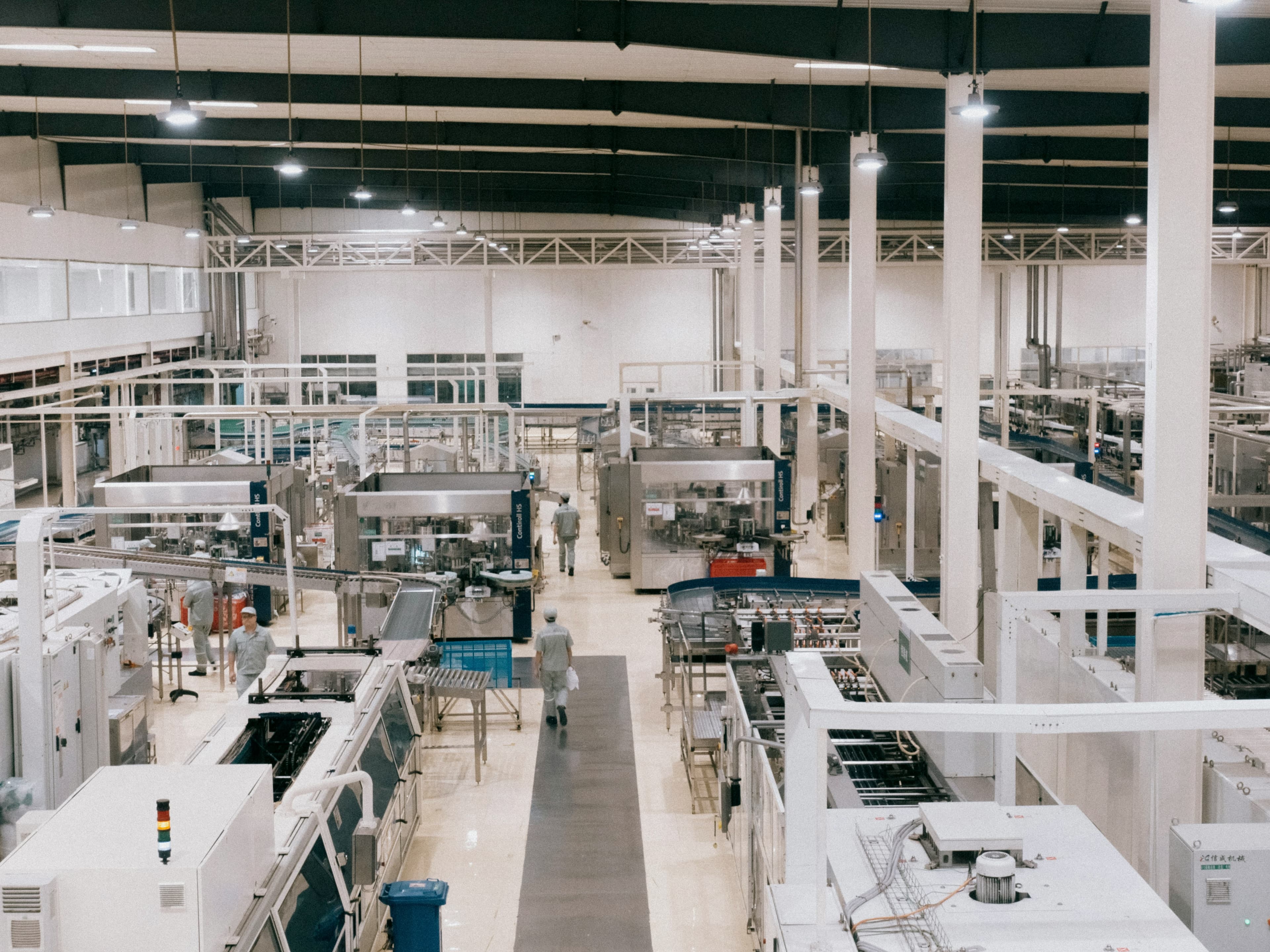
It's 3 AM. Slipsheets are flying off every couple of pallets. The palletiser on Line 4 stops and starts and stops and starts. Your operator tries a different batch of sheets. The issue persists. They get frustrated and start cutting corners, entering and exiting the palletiser area so frequently to manually replace the misplaced sheets, that they pay less and less attention to the safety procedures - it's just a slip sheet after all - and are pressing harder on the HMI screen (which looks like it's about to crack from the growing frustrated finger presses). They slam the guard door harder and harder, pay less attention to other areas, become lenient on quality.
According to them "it's a machine problem", so Engineering comes in to check. According to THEM, it's "not a machine problem mate".
Your operator finishes their shift and passes on their warning about the slipsheets to the next. Yup the business has had a disappointing day on line 4, and your op just had a frustrating day at work. No one wins today.
"These things happen" we tend to say, and generally it's true - every business has bad days and good days. But what if I told you that many of those bad days could have been good days if the right information had been there? And that you're empowered to solve this today? Your end of year review is going to look very different...
So, what happened here? Hint: It's not the operator's fault. Nor the engineer. Nor the palletiser…
The "Context Gap" is the Real Killer
We talk a lot about the "Skills Gap", finding people who can programme a robot or fix up a gearbox. This is a well known challenge of our decade with the retiring workforce and increasingly complex automation, and unfortunately the only way to close a skills gap is through time and practical training. Some tools exist to support this, but it's still a massive investment in time, cost and energy.
The true killer - the one that'll have you hitting your head against the wall wondering why you didn't implement it sooner - is the "Context Gap". Skills are transferable; if your new engineer hire can fix a refrigerator at home they should be ok fixing a cooling unit onsite (of course, some nuance here, but generally it's true). Context on the other hand, is local. That engineer doesn't know YOUR cooling unit. Not like their predecessor who helped commission it and worked with it for the last 5 years. They don't know that the analogue pressure gauge is consistently off by a bar, so they might take the compressor apart when there was no problem with it in the first place. Replacing components that were perfectly fine, adding to wasted spares, labour hours, downtime, where this could have been avoided if either the predecessor had told them about the offset on the gauge or if they'd had a similar experience in the past that would have prompted them to first rule out the gauge as the culprit before moving onto the actual compressor.
Without past 'context', in the latest example above, you just lost a few $ks (or 10s/100s of ks if you're Pepsi Co👀). And you're not even aware it could have been avoided.
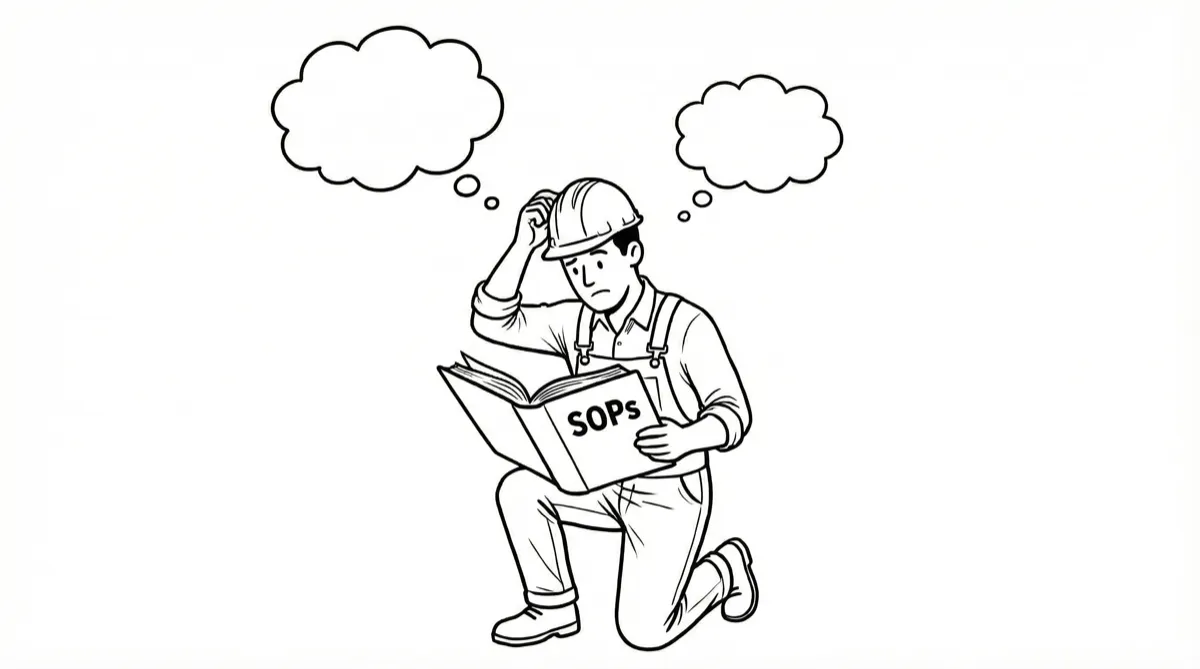
When a long-term employee leaves, they take this "Tribal Knowledge" with them. It's the invisible operating system of your factory. It lives in their heads, not in your SOPs.
When that knowledge walks out the door, the costs compound immediately. MTTR skyrockets on the assets left behind because your new technician, no matter how skilled they are, are left solving the same recurring issues the latest retiree initially solved years ago. This can have second order effects on employee satisfaction.
The Burnout Cycle
Everyone appreciated the retired expert. He was a packing line 'genius' and when he was there most issues were fixed in minutes. Now they take hours. And since every issue takes so long to fix, the line is accumulating a backlog, suddenly one engineer is not enough. The machines haven't changed, so it's probably the new guy's fault right? That's what everyone else thinks. And on their end, they are fighting fires they don't understand and feeling seriously incompetent. They're dissatisfied, stressed, burned out. Inevitably, they quit too, creating a self-fulfilling prophecy of turnover, and the gap is forever left unfilled as every new hire's learnings vanish as they walk out.
The Shift Variance Trap
Let's focus on an op expert this time; some factories like to rotate their staff across equipment stations, others prefer specialisation. Say one op has been on the same line for the last 10 years. What shift do you think the expected throughput will be based on? Theirs. Let's say that's 2% more than other shifts - an expected 12,000 protein pouches/h. Your expert is packing an extra 235 units/hour, because they've figured out that depending on the dimensions of the pouch sku they're filling, they need to adapt conveyor belt speed to make up for increased friction of the bags against the metal guide lanes to avoid them tipping over and causing a jam. But they haven't shared it, there's no convenient way of explaining this and going through change management and SOP editing is a whole lot of work. Plus, it's "more of a feeling you know?". Thus, your productivity will fluctuate with your shifts; this creates volatility; you can't plan capacity because you don't know which version of the factory is going to show up today. Once that operator retires, at least you'll have a more consistent production, at minus 235 units/h !!
The Compounding Value of Realtime Knowledge Sharing
We often approach knowledge retention as a defensive strategy (i.e. stopping the bleeding). We hold on to our experts as much as possible and sometimes even into the retirement age. But the question could be "how do we best support these experts in leaving a legacy for those who come after them?". The incoming wave then add their own legacies on top; your factory stops being a static asset and becomes an appreciating asset.
Valuation
You aren't just selling machine capacity; you are selling a resilient, predictable and self-optimising system that survives turnover and the inevitable curveball.
Shift to shift Compound Interest
If the Night Shift figures out a fix for the case erector, the Morning Shift starts exactly where the previous shift left off. Your factory literally gets smarter with every shift; think of it like a door stop - you're wedging your factory's competency further and further, essentially building an unbreakable system.
Speed to Competency
The "Training Ramp" for practical skills will always exist, but the problem solving and local understanding virtually vanishes overnight. A recent hire can access the collective intelligence of the last 5 years on Day 1.
Why the "Master-Apprentice" Model is Dead
Well, it's not dead. Shadowing definitely works to an extent; for centuries, we solved competency gaps with the Master-Apprentice model. "Put the new guy with Dave for 6 months." That's 6 months where one person slows down your expert and is essentially not contributing to the business. Plus, it relies on memory and focused attention; teach someone all you want, if it didn't make it in or gets forgotten (we are human after all!), what happens then?
Shadowing for the practical workflows is necessary, but your apprentice could have the practical basics sorted in a few weeks and, armed with your site's history and tribal knowledge, they can start contributing way earlier. Some of the biggest downtimes I have personally experienced were due to the simplest bugs; the difficult part was the fault finding process and figuring out what needed to be fixed!
To combat this, most factories will have exit interviews. Good luck asking a retiring expert to "write down what they know". Even they don't know what they know! There are so many situations, nuances, instincts, decades of tacit knowledge and contacts. Some things have become so ingrained that they're instinctive or so natural that the expert doesn't know is not common knowledge already (i.e. checking the fusebox before replacing a lightbulb is not instinctive for everyone).
Building up a "Knowledge Bank"
You cannot stop people from leaving. People retire, move, or find better pay. That is a variable any employer has limited control over. But you can drastically minimise the impact on your business.
We need to shift from Knowledge Retention (keeping the person) to Knowledge Capture (keeping the genius). We need to build a Knowledge Bank that captures insights as they happen, storing them securely for the whole factory to draw from, forever.
This is why we built RossOps.
We realised that the only way to capture tribal knowledge is to make it effortless. You can't ask a busy operator covered in grease to go to a desktop, type a report and fill out a bunch of dropdowns consistently. But you can ask them to speak or share their thoughts casually in whichever language they're comfortable with.
The best time to capture knowledge is in the moment. It's fresh, accurate, timestamped, and available to everyone else on the team and in any other relevant department (Quality, Safety, Engineering…).
Operator: "I'm wiping the suction cups on the palletiser with alcohol because they're dropping the heavy cases. Comes from ink accumulating from where it hit the cardboard, makes it slippy."
Ross: Transcribes, tags, and stores that insight. If relevant - surfaces that another line replaced their packaging to solve pick up issues, and this insight may be helpful here too. For example, have you thought of modifying cup placement or displacing the print to eliminate your issue altogether?
That 5-second voice note is more valuable than a 50-page manual because it is real, contextual, and timely. Six months later, when Dave is gone, the new modification is recorded and the palletiser undergoes an RBC, no one needs to guess the suction cup configuration; the whole story is in ROSS. Decisions aren't made on a context-empty instruction 'correct setup: x' but on a string of thought, the 'why, what, and how'. The line keeps moving.
Decouple Genius from Payroll
Buying cutting edge equipment will put you ahead of competition, but only temporarily and at a high overhead... In the future, the most successful manufacturers will be the ones with the best Institutional Memory; those who were early and consistent.
They will be the factories where a Day 1 employee has access to the collective intelligence of a Day 10,000 employee. Stop losing critical knowledge; keep it where everyone on your team can find it. Invest early, and the value will compound.
Remember that story we started with? The manufacturer originally supplied slipsheet rolls with a large core (think of it like loo roll). The line and process were designed with these sheets in mind. However, the supplier decided to change the configuration of their rolls to smaller diameter core, as that would mean they could stack more rolls on a single pallet. However, what they didn't realise was that a tighter core meant that toward the end of every roll, the sheets were deformed and, once applied to the pallet, they would curl up and fly off.
After a whole lot of troubleshooting and figuring out that there had been a change in core diameter and the pattern was repeating for every end of roll, a temporary measure was put in place to stop applying sheets when the roll approached the last dozen pallets and replacing the roll preemptively (a bit of waste), and the supplier was contacted to supply the original cores.