NZ Manufacturer
We stayed at an Airbnb in the Coromandel last month and, true story, there was an old collection of satirical newspaper comics from the 80s. One was about robots replacing people in factories. In 1982!
Forty years of being told the machines are about to take over manufacturing. And still, it hasn't quite happened yet.
It's so easy to assume it has. You see the Tesla robots, the Boston Dynamics dogs, the humanoids running faster than Usain Bolt, and you assume that's what most manufacturing looks like today. Far from it. The news only highlights the outliers.
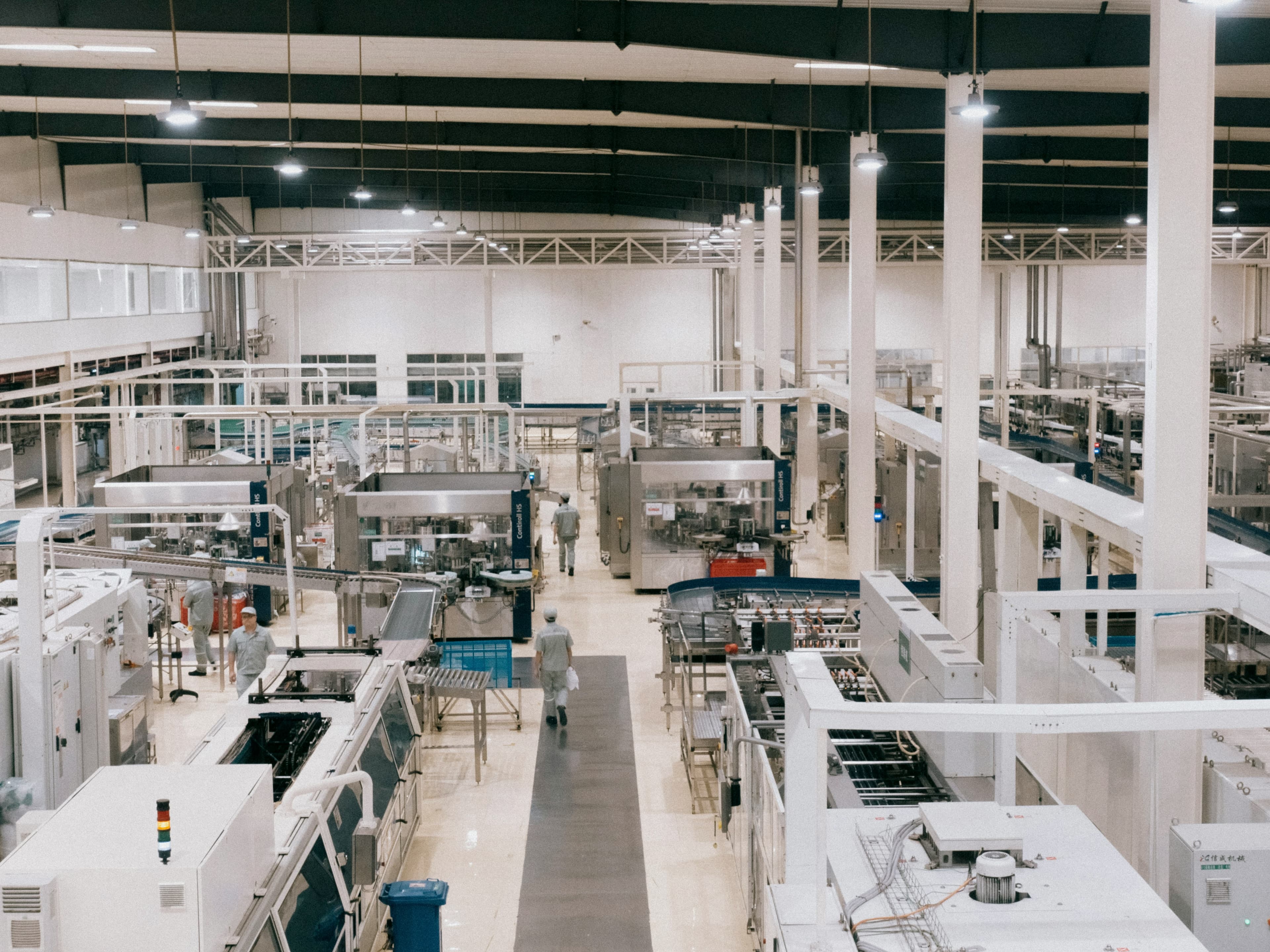
I once did a factory tour as part of a job interview and thought, this place is insane, there are no humans. Let me tell you, there are a LOT of humans running that place.
I happened to visit at lunchtime, and they knew they had visitors. You see the real picture on an average day, not when the cameras come in for How It's Made.
And seemingly, every country assumes another nation has cracked it. New Zealand points to Australia, Australia to Southeast Asia, Singapore and Malaysia to China. Then you speak to Chinese factories and many are no further along than New Zealand.
Automation is not "coming". It's here!
Well, it's basically here. People forget how automated we already are. We're in the long tail now, automating the last fraction of a percent. What's left in the tail is highly challenging because it runs on judgement, context, and things people know but never wrote down, not because we need a stronger arm or faster drive.
This would explain why, beyond cobots and AGVs, I've rarely seen a fully autonomous robot earning its keep. The one surprising success story is a Boston Dynamics Spot at a US pet food site, rigged with acoustic sensors for predictive maintenance.
At the other end, a vendor I met in Malaysia admitted his humanoid was mostly a gimmick so he could sell the "good stuff". Another couldn't even show me his robot because its battery got stuck at airport customs.
Hunting for the dark factory
What about dark factories, the lights-out plants? Someone I spoke to recently put the number at 15%, which sounds very far off reality. So I did some digging.
We couldn't find an accurate count, presumably because they're that rare. What the IFR's numbers do say is there's about one industrial robot for every 76 factory workers globally, and a Kearney survey found humans still perform roughly seven in ten manufacturing tasks.
And yet Deloitte reports 92% of manufacturers believe smart manufacturing will decide their competitiveness.
Not every industry is automotive
Automotive, defence and electronics are heavily automated, and rightly so. Same product for ten years, micron-level precision, highly coveted IP, and the highest cost of downtime going.
Now take food and beverage, rarely pictured when we say "manufacturing", yet worth around seven trillion dollars a year, roughly twice automotive. A live, ever-changing product, changeovers every few hours, different SKUs on demand… it is hard to make it all run in sync.
Self-driving cars are analogous.
If we built our roads from scratch today, not a single human would be behind the wheel.
Yet I look out the window and don't see a single Waymo, because solutions have to fit the world as it exists.
Same with factories. Most can't be knocked down and rebuilt, a full retrofit takes years, and in much of the world labour still costs less than the robot.
So what's different this time?
Of course automation will continue. I just think the interesting question isn't "what should we automate next?", but "what major inefficiency can we remove, and what's the best solution for it?".
Is a backflipping palletiser going to solve the bulk of your inefficiencies, or is it improving the culture in the plant, getting a CI consultant in, or building a clever Excel?
And that's what makes this wave, driven mainly by AI, different from the last forty years. Automating a plant has never removed the need for judgement. A modern plant throws off enormous amounts of data, and yet decisions still run on a supervisor's memory and a phone call to the fitter who's on leave.
Every previous wave only worked on tasks that were physical and repeatable. This is the first that's any use on the messy stuff, which is most of what running a plant actually is.
If I were running a plant I'd start with the questions I can't easily answer today, the ones whose answers sit in people's heads, on WhatsApp, on a whiteboard, in someone's own Excel. This line was down four hours, but what exactly happened, and why?
What's it going to cost us, and do we need to alter the production plan? How do we make sure it doesn't happen again, long after I've gone from this factory?
Know all that, and your people start running like an F1 team.
Nobody wins an F1 race on the car alone, they win it with people who know exactly what happened on lap 12 and what to do about it.
Give me that crew in a Polo over a shambles of a team in a Ferrari.
My belief is that a step change in how well people operate the equipment they already have is the most affordable and immediate unlock AI has handed manufacturing.
The robots get the headlines, but there would be no product coming through factory doors today if there weren't 500 million people employed in the sector.