Factory Futures Podcast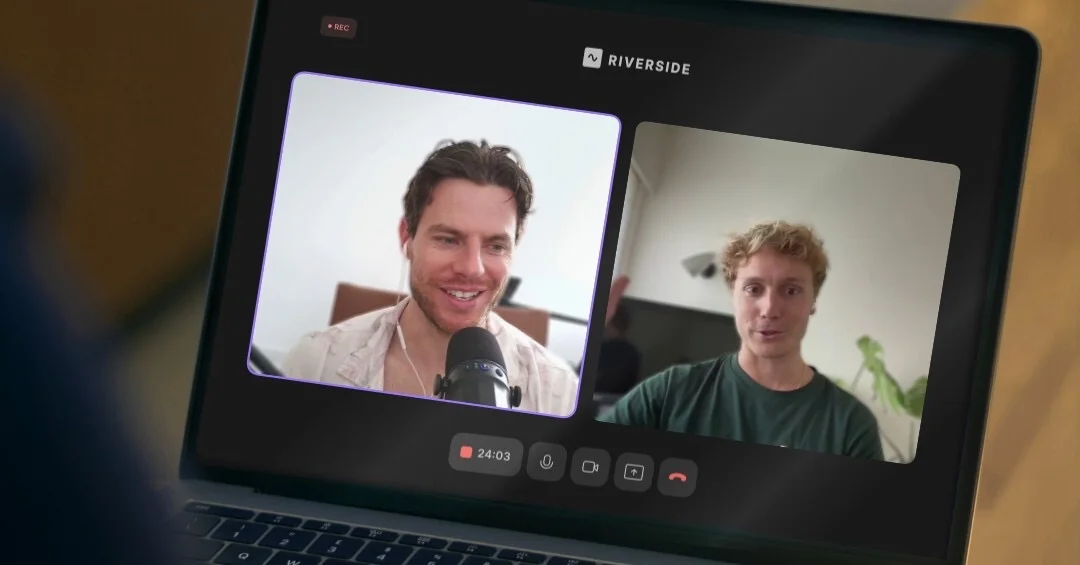
Insights from a Factory Futures Podcast conversation with Loïc Estier, co-founder of RossOps, hosted by Jean-Philippe Picard, co-founder of Factory AI.
The knowledge to run a plant at its best already exists inside the building. The hard part, as Loïc puts it, is "capturing it before it walks out the door." In a recent Factory Futures Podcast conversation, Loïc laid out why factories keep losing hard-won expertise, why traditional documentation fails to hold onto it, and how a new generation of AI tools is changing what's possible.
The expertise gap equipment can't close
Loïc's path into manufacturing started with food production and a fixation on "finding a way to feed the world without destroying the planet." After exploring traditional agriculture and a brief stint in vertical farming, he joined Nestlé, his entry into manufacturing at scale.
At Nestlé he was responsible for the performance of pet food packaging lines, working inside a mature operating system: TPM, a version of the Toyota production system, brand-new machines, and the best systems available. And yet one observation stuck with him.
"The performance of those lines really varies depending on who you've got on shift," Loïc said. "The biggest difference was actually who's running your lines, not necessarily what sort of equipment we've got on there."
That insight, that the operator often matters more than the machine, became the seed of RossOps, which Loïc describes as "an AI platform that helps manufacturers capture the knowledge that is held and lives inside the heads of their most experienced people, and make it available to the rest of the team."
The myth of the "dark factory"
People outside manufacturing tend to assume modern lines are fully automated end to end. Loïc pushes back on that picture. Fully automated "dark factories," he points out, are still a very small share of the factories actually running the world.
Automation reliably replaces a repetitive task, and over time it tends to be faster and cheaper. But "you still need humans to orchestrate all of this, and things don't always go as planned." SKUs change, packaging changes; a factory is "a living, breathing environment." Retrofitting the world's existing plants into dark factories would mean breaking them apart and starting from scratch, which is why the human element isn't going anywhere soon.
More data than ever, and the same problems
Manufacturers today collect more data than they ever have. MES, CMMS, ERP, inventory management systems, all of it recording continuously. Walk into a plant and a dashboard will tell you which lines are running and how many units are being packed every minute.
"You have all of this amazing data that is just given to you," Loïc said, "but there's no meaning behind it. It is just data. These are facts."
He compares the instinct to meeting transcripts: reassuring to know they exist, rarely revisited. Dashboards are good at telling a leader where to look ("I see a lot of red here"), but not why something happened or what to do about it.
Loïc illustrated the gap with his old Monday routine at Nestlé: open the dashboard, see hours of downtime in red, check the reason codes and brief comments. You can see roughly where the problem was and how long it lasted. But the real story, what actually happened, is scattered across email shift reports from engineering and production, hallway conversations, and a weekend nobody on the current shift witnessed. By the daily operational review, you're rebuilding the picture from fragments, often unable to say what caused the downtime or how to prevent it recurring.
42% of knowledge lives only in someone's head
Loïc cited a widely reported statistic, drawn from a cross-industry study and not specific to manufacturing: 42% of experienced workers' knowledge exists only in their heads. He suspects the figure runs higher in manufacturing, where teams aren't sitting at desks documenting as they go.
The deeper problem is that people "don't even know what you know." Three decades of experience can't simply be written into a standard operating procedure, because so much of it has become unconscious.
"You can hear the belt jumping, you know that you should slow down the conveyor, because you'll actually have a more reliable output, even though it's slower… That sort of thing, it doesn't live in your SOP."
He likens it to teaching someone to drive: the task is so embedded as habit that the expert struggles to articulate it. He recalled an operator who would walk up to a misbehaving line, tap through the HMI, and have it running perfectly again, yet couldn't explain what he'd done. "You can't just write it down. You need to actually show me how it's being done and explain it while he's doing it." Loïc noted that the Toyota production system even includes a practice of workers saying each action out loud, precisely to surface this kind of invisible knowledge.
Two breakdowns that became a company
Loïc shared the two incidents that crystallized the idea for RossOps.
The case labeler. A labeler applying labels to boxes on a major line went down. Because labeling is a compliance requirement, the whole line stopped, and there was no spare. The team replaced nearly every component, contacted the OEM, and changed the production plan, suffering significant downtime. Then, at shift changeover, an engineer walked up, looked at it, and said he'd seen this before, years earlier, at a different factory. He went to the stores, came back with an elbow-shaped air fitting worth a few dollars, and the line was running again. "He knew exactly where to look… because he'd seen such a niche issue in the past."
"Are we just going to run and not write this down? This is crazy," Loïc remembered thinking. Other factories in France, Japan, and Brazil could hit the same fault, and even if someone documented it, it would sit unfindable in a folder somewhere.
The oven, and the name. Packs were coming out of an oven burned on one side and loose on the other. The team replaced temperature probes and heating elements, and even visited other factories to compare. The fix came from a reliability and methods manager, recently arrived from an Amazon warehouse, who reasoned from first principles and asked whether anyone had checked the fans circulating the air. One of the two fans had been wired the wrong way around, pushing hot air to one side. A five-minute fix to what Loïc calls "a million dollar problem."
That manager's name was Ross, and that is where the company name comes from. "Every factory has a person like this," Loïc said. "The idea was, well, can I take Ross, digitize him, and make sure that he's there available for everybody else on shift?"
Why traditional knowledge bases fail
Most plants have tried to solve this. The classic approach: after a breakdown, sit everyone down, run the five whys or a fishbone analysis, write a report, then file it in a folder, a Google Drive, or SharePoint.
The failure modes are familiar. Nobody knows the document exists or where to find it; access permissions add another barrier. And engagement fades: when a structured improvement program rolls out, everyone participates at first, but over time "people are there to just run the lines… you can't just pull them out of the line to sit down in a room." Loïc's takeaway: any solution has to deliver value to the operator immediately, or the information stops flowing.
The one place he saw a knowledge base genuinely work was a plant in France, where an operator named Daniel had run a single line for around 20 years and documented everything, for himself. It worked because he knew where to find it and went back to it. But when Daniel was on holiday, the line went down for hours; the team replaced multiple components before someone called him, and he immediately identified a sensor that had been knocked out of place during cleaning.
"Building a knowledge base for yourself, great. Having others use your knowledge base, really difficult."
Structured data vs. human context
Loïc draws a sharp line between the two. Structured data is good for trends; it tells you "this is our biggest bottleneck or this is our biggest cost," which helps you decide where to focus. What it can't tell you is how to run a line at nominal speed or fix something in five minutes instead of eight hours. "That comes from unstructured inputs."
He also warns that structured systems introduce their own fragility. A camera inspecting pallets, or a Power BI dashboard, is often maintained as a side project by one person. When that person leaves and the system breaks, "people stop showing interest, and no one picks it back up." The next specialist builds their own version, and "it'll never get better, it'll just be different."
The unlock with modern AI, in his view, is the ability to "leave the factory as it is" and "accept the chaos." If an operator describes an issue in their own words, calling something a palletizer or "a bag stacking machine on top of wooden crates," the system can still recognize it as the same thing and make sense of it after the fact. "You're not forcing anyone to change the way they work, because that is really hard."
He extends the point to folder structures themselves. A useful breakdown report might belong equally in an "engineering" folder and a "line 8" folder; duplicating it creates version problems. "Things, just like in our brains, can exist in multiple places," and being able to make multiple associations without forcing a single home for each document is, he argues, a major unlock.
The compounding edge
Asked how he frames AI for anxious teams, Loïc reaches for a GPS analogy. Drivers used to navigate with paper maps, stopping on the roadside to work out a route. GPS didn't change the end result; you'd both get to the destination either way. But the driver with real-time traffic gets there "a lot faster with less fuel and less frustration." And critically, everyone using GPS is "building on top of each other's knowledge of which road is the best." (The host extended the analogy to Waze, which built its maps by learning from the routes its own drivers took, a network effect where every data point benefits everyone else.)
In manufacturing, Loïc argues, that compounding is a competitive edge: "The longer you wait, the further behind your competitors and peers you'll be." He frames the human question the same way: the person who pairs with AI to be more productive than either alone is the one who becomes indispensable.
He describes RossOps' own progression in three stages:
- Shift-to-shift communication. The starting point is the shift handover, chosen deliberately because it's an existing process operators already do daily. "I'm not asking you to do anything new. I'm just asking you to do it this way." Operators capture context as things happen; the next shift receives it summarized, so they know exactly where the last shift left off, including why a setting was changed, so they don't undo a deliberate temporary fix.
- Cross-shift intelligence. Recognizing that some issues recur across multiple shifts and surfacing them as patterns, one of the company's more recent additions.
- Site-wide and cross-site intelligence. From there, trends week-to-week and month-to-month: for example, recurring oven temperature issues that turn out to be an HVAC problem across the whole site, not one machine. Eventually, sharing across sites running the same equipment.
On the limits of today's tools, Loïc is candid. Chat is the best interface found so far because it's flexible, but it tends to "rabbit-hole," chasing semantically similar issues rather than stepping back. His answer is agents that bring the right information to you proactively: "Often we don't know what to ask for in the first place, but if the right information surfaces on its own, we can act on it."
From firefighting to improvement
The end game, as Loïc sees it, is a plant that isn't reactive. "If you're in a space where you are running at nominal and the only thing you need to focus on, if you wanted to, is how do I make this even better, then you're really winning."
A few sharper takeaways from the closing quickfire round:
- The simple problems that cost hours of downtime: sensors knocked out of place during cleaning, loose cables, and burst air pipes. "You'll see a problem here, but actually the root cause is way over there."
- What plants think they document well but don't: SOPs. They get written, "but you can't capture all the useful information and maintain it up to date in real time, let alone update it annually."
- What a plant manager should start tomorrow: record your shift handovers properly. "If that is not part of the process already… just at least start doing that," so the data exists to use later.
- The biggest mistakes when digitizing operational knowledge: trying to perfect everything and building a system that asks people to change their behavior ("that will never work"), and assuming you can build it in-house as a side project, when "it'll break as soon as you're not there."